
A Written Phase Plan
Before the day, the surface is split into sections with an order and a reopening time for each. Everyone who uses it can be told what is closed and when.
Serving Pittsburgh, Pennsylvania & surrounding areas
Mon–Fri 8am–6pm · Sat 9am–2pm
Plenty of Wilkinsburg asphalt is shared: a drive serving two households, a lot behind a row of storefronts, parking a tenant needs tonight. Scheduling becomes part of the specification.
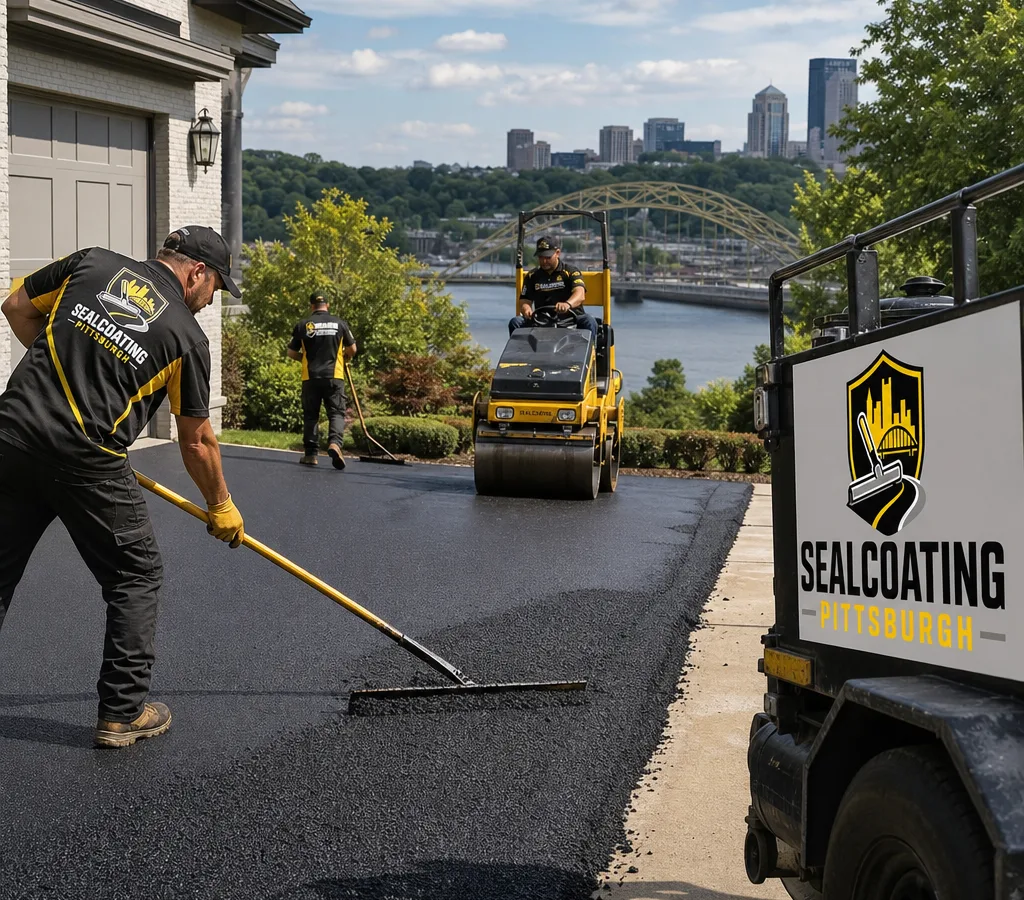
On a private driveway, curing is a household inconvenience. On pavement several people depend on, closing the whole surface at once is not available, because somebody needs to get a vehicle out before the coat would be ready.
The answer is phasing. The surface is divided so one portion cures while another stays in use, which means the work is planned around access first and coating second. Done properly nobody is blocked in and no tire crosses soft sealer.
Phasing costs a little time on site and saves the far larger cost of a ruined section and a conversation with a neighbor or a tenant.
Shared-pavement jobs are scheduled from 2123 5th Ave, Suite 4, Pittsburgh, PA 15219, and the phase plan is written up before any date is held. Other pavement work is covered under sealcoating in Pittsburgh.
Everything here follows from the pavement being shared, so the plan is written around keeping part of it usable rather than closing all of it at once.
Before the day, the surface is split into sections with an order and a reopening time for each. Everyone who uses it can be told what is closed and when.
At least one route in or out stays usable at every stage. No vehicle is sealed in behind a section that is still curing.
Closed sections are marked so they read as closed to someone who was not told. Cones and tape go up before material does.
Where two phases meet, the junction is worked so the finished surface does not show a hard line between what was coated first and second.
Each phase gets a specific time it can take traffic, so you can tell a tenant or a neighbor something definite rather than later today.
The first conversation is about use rather than asphalt. Who relies on the surface, when they need it, which vehicles have to be able to leave, and whether anything about the timing is immovable.
Then we look at the pavement itself for what shared use has done to it. Traffic concentrates on the route everyone takes, so wear is rarely even: the common path shows it first, while bays at the edges can still be in reasonable condition.
Those two pictures produce the phase plan, which is agreed in writing before a date is confirmed so that nobody finds out their parking is closed on the morning.
Phasing of this kind applies to shared residential pavement. A commercial lot with customer traffic needs a wider traffic plan, which we put together as a separate scope.
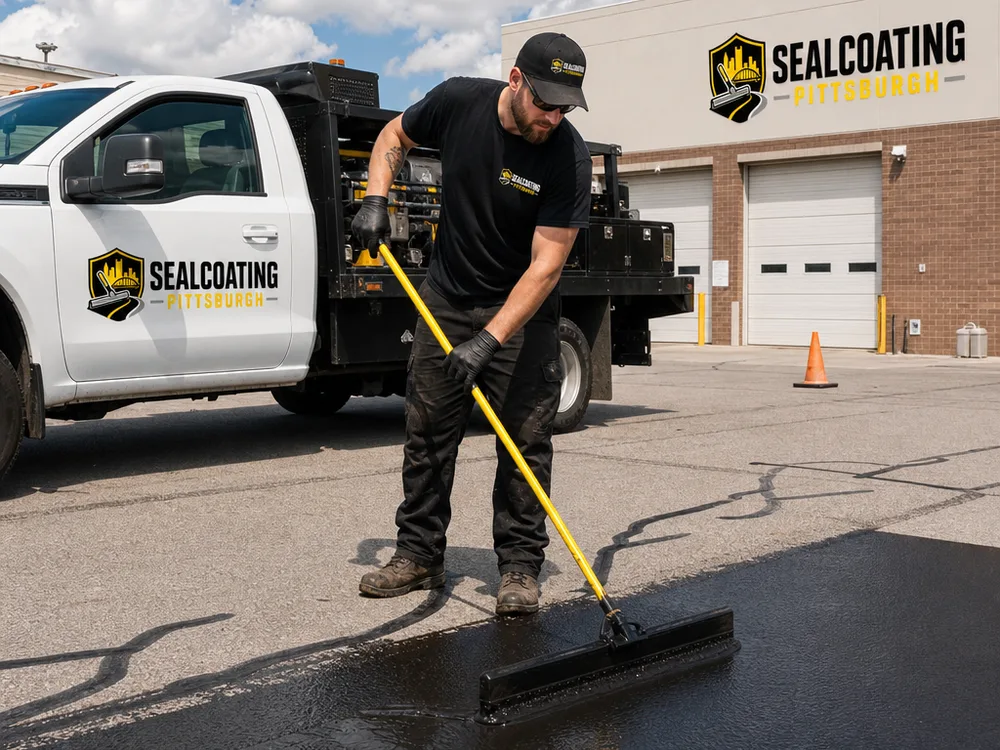 Controlled edge application
Nothing closes all at once here. The surface is divided first, then worked in turn, so some part of it stays available to everyone throughout the job.
Access requirements come first: the vehicles that must be able to move and the times that cannot be worked around.
The pavement is split into sections that can cure independently while leaving a usable route for everyone through each stage.
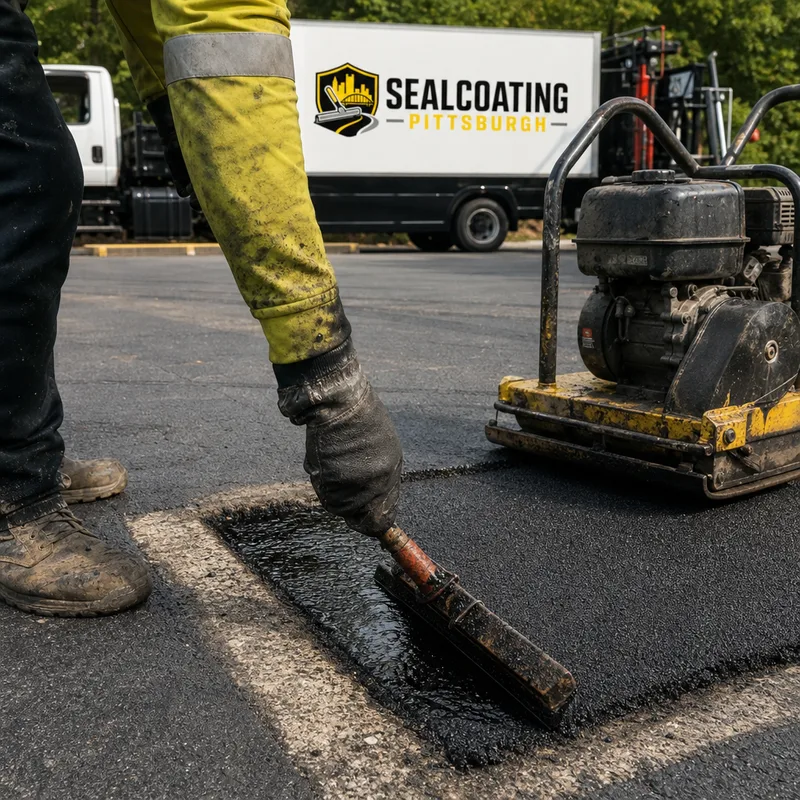
Cleaning and crack work are done across the surface before coating begins, so each phase is ready when its turn arrives.
One section is coated and barricaded while the next stays open. Nothing is closed before it needs to be.
A section is reopened once it has genuinely set, and the next phase starts from there until the surface is complete.
Residential driveways in the Pittsburgh area typically sit between about $250 and $900 depending on size and condition, with single-car drives often around $250 to $450 and larger driveways or small private lots commonly $500 to $900 and up. Larger commercial lots are measured by area instead, generally about $0.18 to $0.45 per square foot.
Phasing shared pavement adds set-up time rather than material, since the surface is closed and reopened in stages. Any repair work found during preparation is quoted separately. Every figure is confirmed after the surface has been measured and the access plan agreed.
Book Your Free InspectionShared surfaces after sealing, including the phased sections and the staging that kept them reachable while material cured.
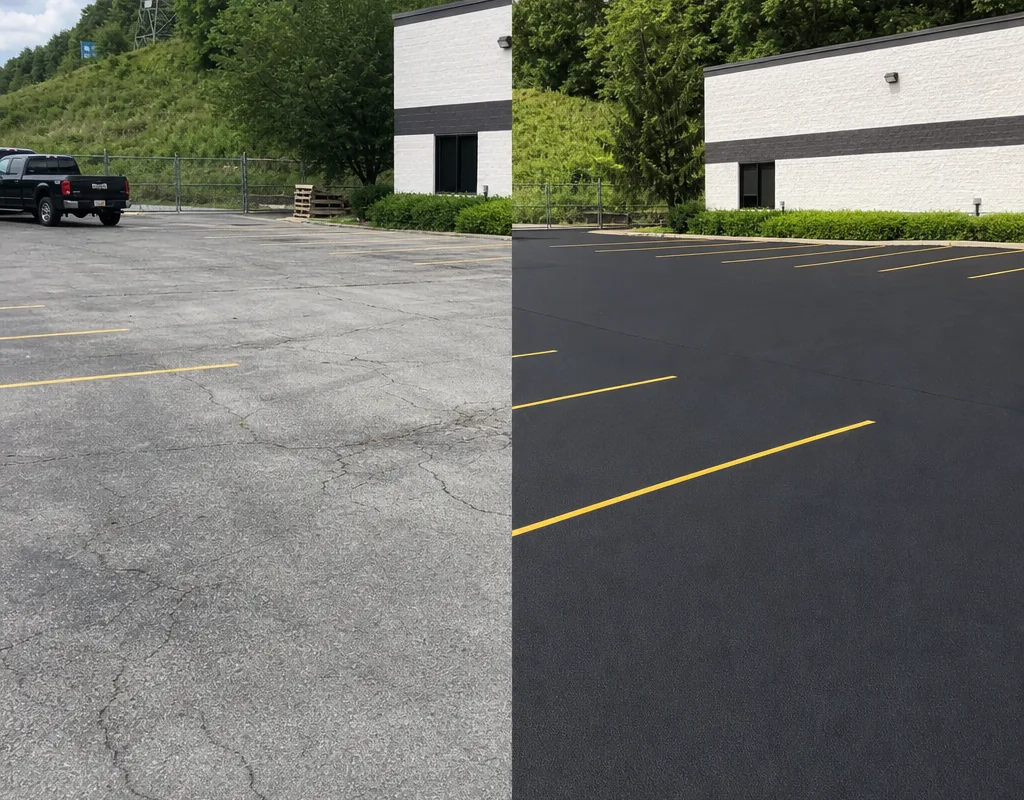
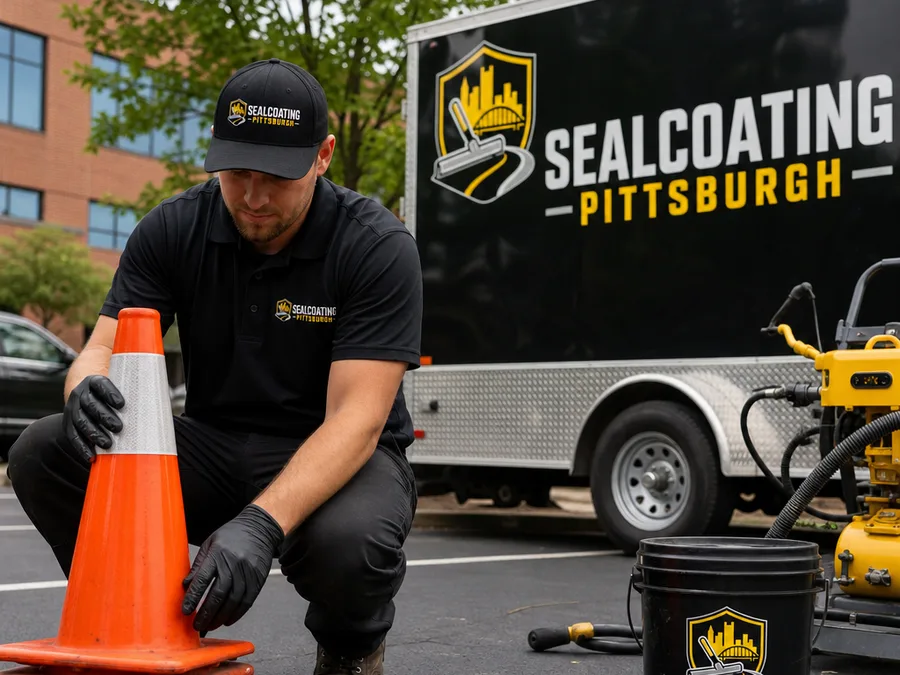
What neighbors and landlords ask when the pavement is not solely theirs to close, and somebody still has to be able to park while the work goes on.
Yes, and it is worth agreeing the plan with both households first. The drive is normally done in sections so one side can still get a vehicle out while the other cures.
Not all of it at once. The lot is phased so some bays stay usable at every stage, and each closed section gets a stated reopening time you can pass on.
It marks, and the marks generally do not come out of a fresh coat. That is the reason for barricading and signage rather than relying on everyone having been told.
Because that is the line everyone drives. Shared surfaces wear along the common path, so the center can be breaking up while the edges are still sound. The repair plan follows that pattern.
For shared pavement, yes, at least on the access plan. Phasing only works if the people using the surface know which part is closed and when it comes back.
Sometimes, though cure time is set by temperature and conditions rather than by preference. If an overnight or weekend slot genuinely helps, we will say whether it is workable for your surface.
If your shared drive or lot needs sealing but cannot simply close, have the access and the wear pattern assessed so the work can be phased properly.
Call for a Free EstimateTell us who uses the surface and when, and which vehicles have to be able to leave. We will measure the pavement, set out the phases and reopening times in writing, and confirm the scope before a date is held.
Request a quote
Send the size, surface condition, and access details. We reply with next steps and schedule an on-site look before any written scope.