
Hand-Worked Edges
The full length of both edges is cut in by hand rather than sprayed close and hoped for. That is what keeps a straight line against a wall or walk.
Serving Pittsburgh, Pennsylvania & surrounding areas
Mon–Fri 8am–6pm · Sat 9am–2pm
Brentwood lots are close together, and many driveways are a narrow run between two houses. Clearance that tight decides how material can be applied and where a car can sit while it sets.
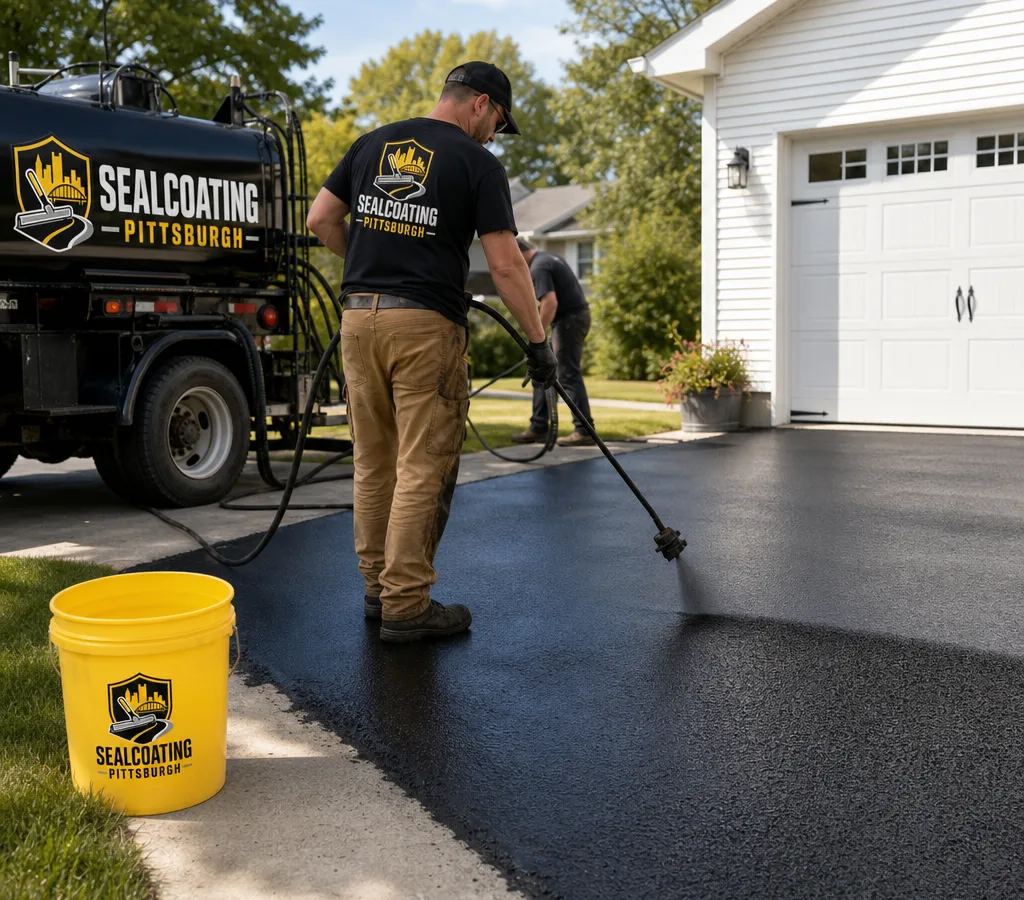
A driveway with a foundation wall on one side and a neighbor's property on the other cannot be worked the way an open surface can. Equipment that covers an open lot quickly has nowhere to go, so more of the surface is done by hand and the work takes longer per square foot.
The margin for error also shrinks. On an open driveway a stray pass of sealer lands on asphalt, while here it lands on a foundation, a downspout, a walkway, or a fence post. Masking stops being a finishing touch and becomes part of the method.
None of that changes what sealer does. It changes how long the visit takes and how much of it is spent on preparation rather than coating.
Crews reach Brentwood from 2123 5th Ave, Suite 4, Pittsburgh, PA 15219, with the clearance survey built into the walkthrough at no separate charge. The wider service list is set out under sealcoating in Pittsburgh.
What follows is shaped by the clearances on either side, from the way material is cut in along a wall to how equipment reaches the back of the drive without crossing a neighbor's property.
The full length of both edges is cut in by hand rather than sprayed close and hoped for. That is what keeps a straight line against a wall or walk.
Foundations, steps, downspouts, and sidewalk slabs are covered before any material is opened. Sealer on a block wall is far harder to put right than preventing it.
A narrow surface is easy to over-apply because the passes overlap so often. Coverage is measured as the work goes rather than judged by eye at the end.
Grit collects along a confined driveway and does not blow clear. It is swept out of the full length, including the strip against the wall where it packs in hardest.
With one way in and no room to pass, you get a plan before the day: where the car goes, which end is blocked first, and when the drive is usable again.
The first pass is measuring and clearance. How wide the run is, what sits along each edge, whether a crew and material can reach the far end, and where the surface has already taken damage from being used at that width.
Then we look at what the confinement has done to the asphalt. Driveways hemmed in by structures stay damp longer because air and sun reach them for less of the day, and that shows up as slower drying and moss or staining along the shaded edge.
That picture decides the sequence and the realistic duration, both of which go into the written scope before a date is agreed.
Everything above assumes a private residential driveway. A confined commercial service bay or a loading approach has its own constraints and is quoted on its own terms.
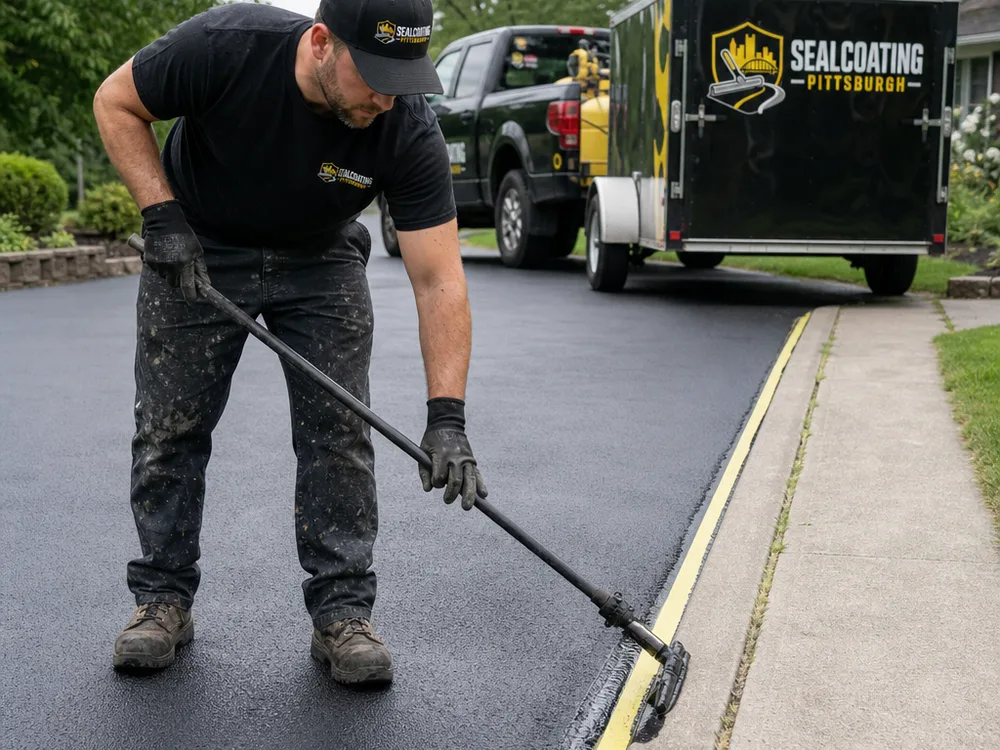 Controlled edge application
Clearance decides the method here. Every step below is adjusted for a surface that cannot be approached from both sides.
Width, length, and the pinch points are recorded first, along with whether material can reach the top of the run without crossing anything that matters.
Walls, steps, downspouts, posts, and concrete are masked along the whole length before the first container is opened.
The strip where grit compacts against a wall is cleaned out properly. Sealer over packed debris lifts in sheets the following spring.
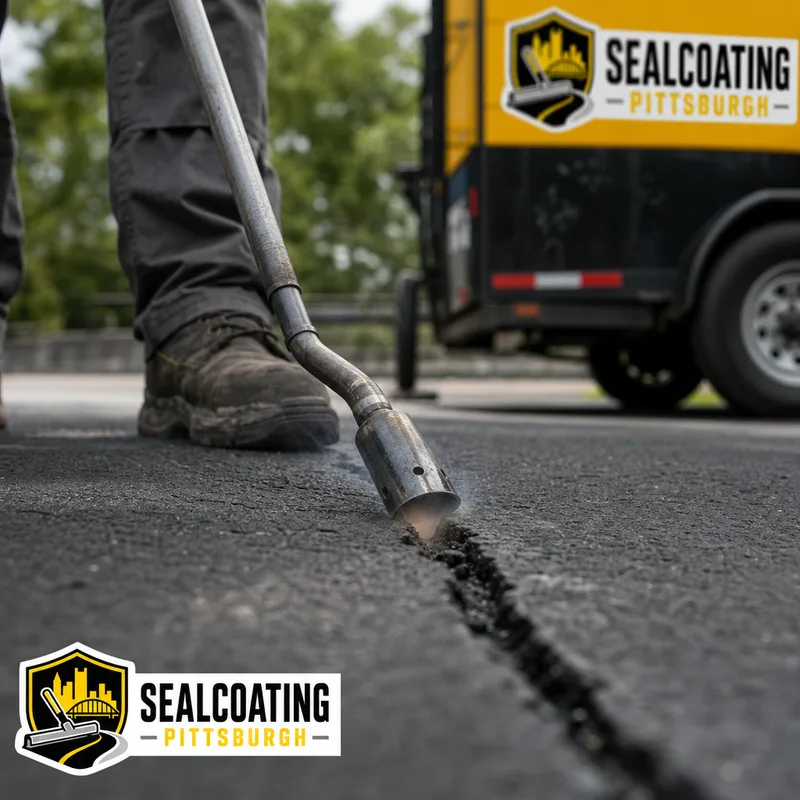
Cracks and the joint along a foundation wall are cleaned and filled as a separate step, since that joint is where water most often gets underneath.
Material goes on in passes sized for the width, working out toward the street so nobody is standing on fresh sealer at the closed end.
Across the Pittsburgh area, residential sealcoating generally falls between about $250 and $900 by size and condition. A single-car drive is frequently in the $250 to $450 band, and longer or wider driveways along with small private lots usually run $500 to $900 and up.
A narrow driveway is not priced by its square footage alone, because masking and hand edging take time that an open surface does not need. Any patching found along a confined edge is scoped and priced on its own. The figure is settled after someone has stood on the driveway and measured it.
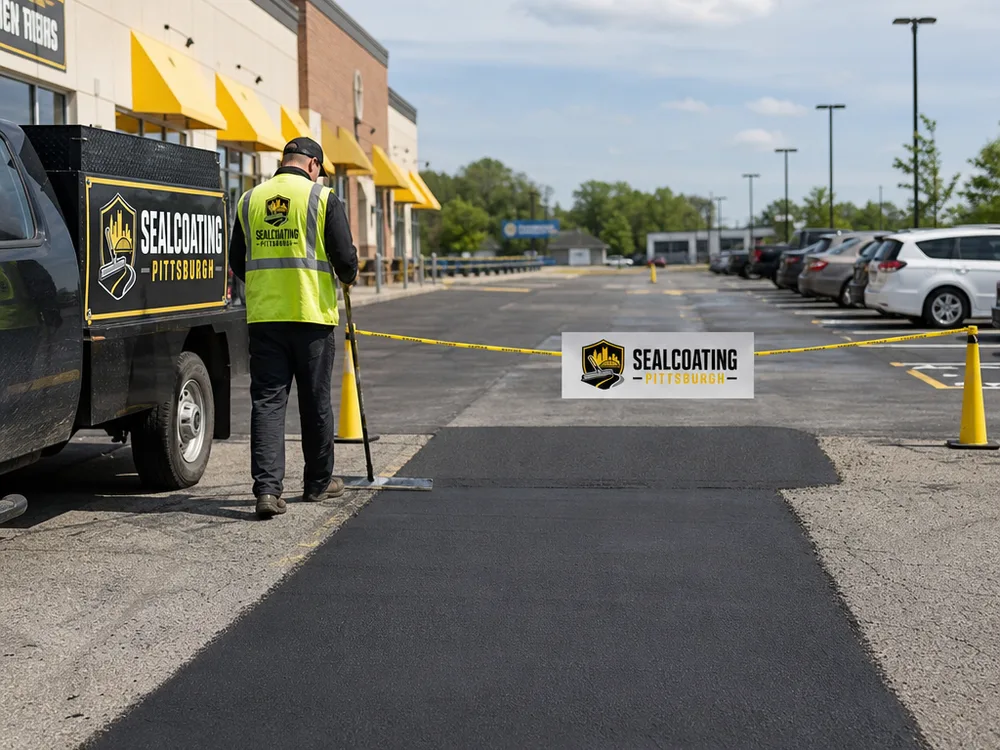
Book Your Free InspectionClose work along walls, sidewalks, and property lines, where the cut-in is the part you actually end up looking at once the job is finished.
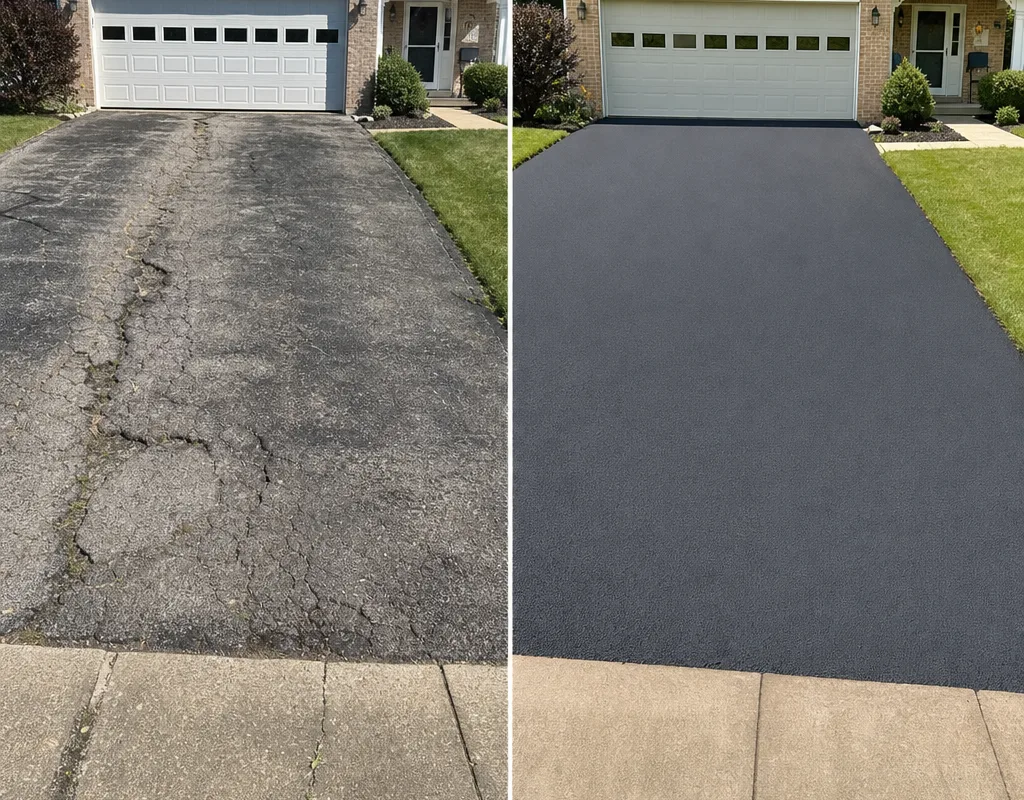
Questions about narrow drives: whether they can be sealed at all, what gets masked and protected alongside them, and where to park while it cures.
Yes, and most of the work is done by hand at that width. Expect the visit to take longer than the square footage suggests, because the preparation and masking are the bulk of it.
Not if the surfaces are masked first, which is standard on a confined run. Anything within reach of a pass gets covered before material is opened, and the edges are cut in by hand rather than sprayed near.
That is agreed before the day rather than worked out on the morning. With a single entrance the car needs to be off the driveway before the crew starts, and you get a reopening time at the end of the visit.
Usually shade. A run between two houses gets direct sun for only part of the day, so the shaded strip stays damp, holds grit, and can grow moss. It needs cleaning and drying time before it will take a coat properly.
That is checked at the walkthrough, not assumed. If the pinch points stop material reaching the far end, we say so then rather than discovering it with a crew on site.
Sometimes. A surface that stays damp longer tends to show wear sooner than an open one, but it depends on the slab, the drainage, and the traffic. We look before recommending an interval.
If your driveway runs between two buildings and the edges are starting to crumble or stain, get the clearance and the drying conditions assessed before work is booked.
Call for a Free EstimateLet us know the width, the length, and what sits along each edge. We will measure the run, confirm what can be reached, and set out the masking and the parking plan in writing before any date is held.
Request a quote
Send the size, surface condition, and access details. We reply with next steps and schedule an on-site look before any written scope.