
An Honest Repair Order
Each defect is sorted into fill it, patch it, or leave it. A hairline crack and a flexing low spot are different problems and they do not get the same answer.
Serving Pittsburgh, Pennsylvania & surrounding areas
Mon–Fri 8am–6pm · Sat 9am–2pm
A good deal of Swissvale asphalt sits over older fill and has moved since it was laid. Where the ground underneath has settled, repair order matters more than the coating itself.
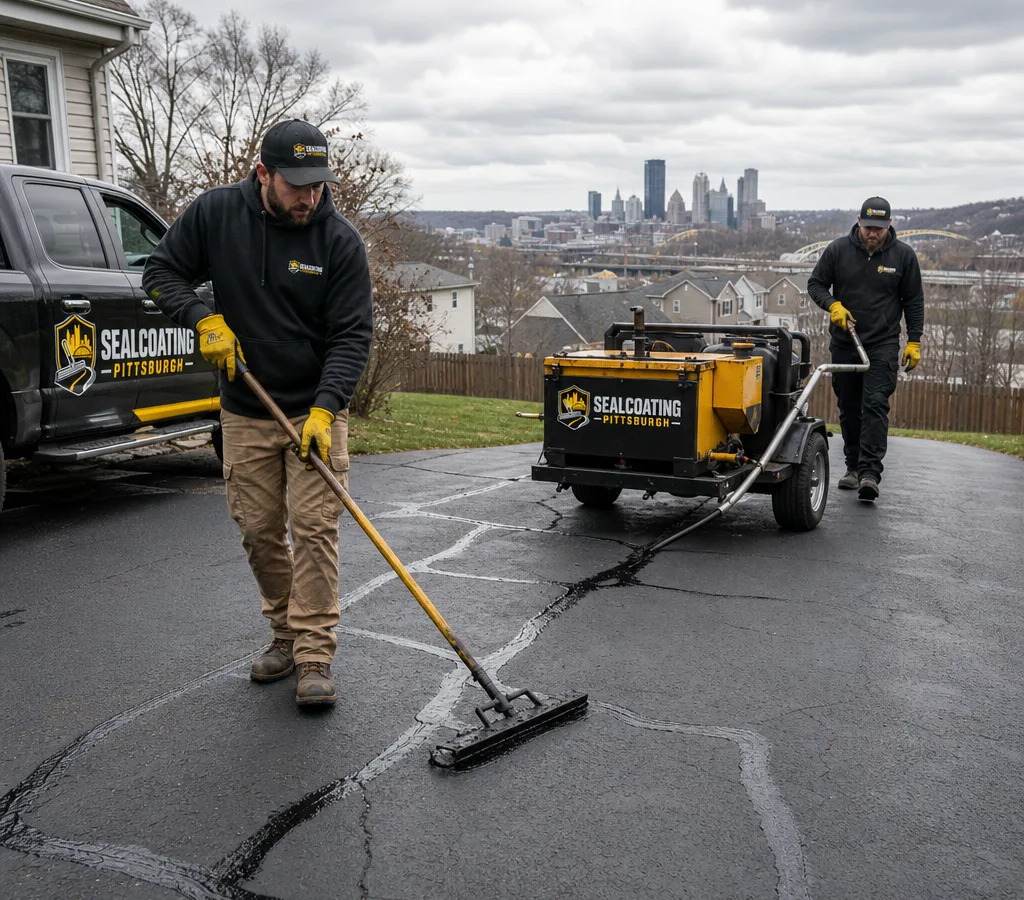
Sealcoat is a protective film. It keeps water, salt, and sunlight off the asphalt and it holds a surface that is sound in sound condition for longer. What it will not do is carry weight or bridge a void.
That distinction decides everything on a driveway that has settled. A dip, a low corner, or a section that flexes under a tire is telling you the material beneath has shifted or washed out, and a coating over it hides the evidence for one season before cracking along the same line.
So the sequence on an older surface is repair first and protect second. Reversing those two is the most expensive mistake available on this kind of driveway.
The work is run out of 2123 5th Ave, Suite 4, Pittsburgh, PA 15219, and separating repair from protection happens before quoting rather than after. Related pavement services are listed under sealcoating in Pittsburgh.
These points all turn on one distinction: what a coating can genuinely protect, and what has to be rebuilt first because no film will hold it together.
Each defect is sorted into fill it, patch it, or leave it. A hairline crack and a flexing low spot are different problems and they do not get the same answer.
A section that moves under load is cut out square and rebuilt in layers. A skim of material over a soft spot is a cosmetic fix that fails within a year.
Open cracks are cleaned out and filled before anything is coated, because an unfilled crack is a direct route for water into the base that caused the problem.
If a driveway needs more than protection, you hear that during the walkthrough. We would rather quote repair and sealing honestly than coat a surface that is failing underneath.
Patched asphalt and original asphalt absorb differently. Coverage is planned so the finished surface reads evenly rather than mapping out every repair.
The walkthrough is looking for movement. Low areas that hold water after rain, cracks that have opened rather than stayed hairline, edges that have dropped, and sections that give slightly when weight goes across them.
Older driveways here often carry earlier repairs, so part of the assessment is reading what has already been done and whether it held. A patch that has stayed flat and tight is doing its job, and a patch that has sunk tells us about the ground beneath it.
The result is a written scope that separates the structural work from the protective work, with each priced on its own so the decision is yours to make.
The work described here is residential. Structural repair across a larger lot follows the same assessment logic but is scoped and priced as pavement repair rather than sealcoating.
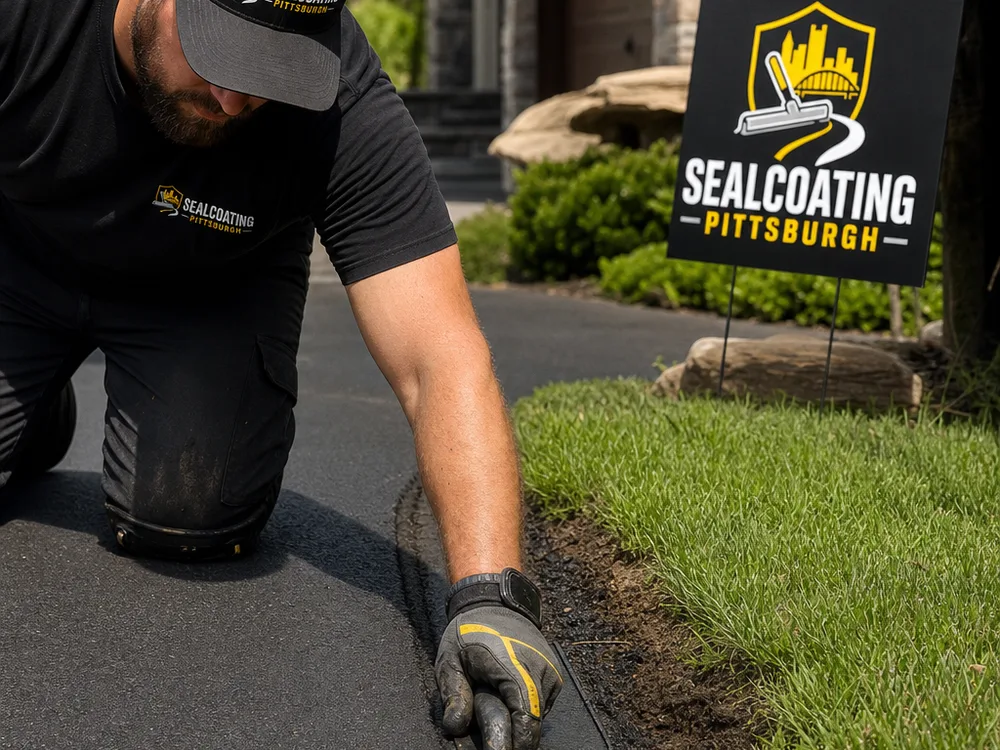 Controlled edge application
Older surfaces get assessed before they get coated, because the first decision is always what sealer cannot fix and what has to be rebuilt instead.
Low spots, flexing sections, and dropped edges are marked before anything else, because their locations determine the whole plan.
Every marked defect gets a decision and a reason. That list is what you approve, and it is the list the crew works to.
Patches are cut square, prepared, and compacted in layers so the repair carries load instead of just filling a hollow.
With the structural work done, cracks are cleaned and filled. Doing this after patching avoids filling cracks that are about to be cut out anyway.
Only once repairs have set does the protective coat go on, applied so the surface reads as one driveway rather than a set of repairs.
For most residential driveways around Pittsburgh, sealing typically ranges from roughly $250 to $900 according to size and condition, with smaller single-car drives often near $250 to $450 and longer or wider surfaces and small private lots commonly $500 to $900 or above.
Repair is quoted apart from protection, because they are different work. Patching on these sites generally starts around $250 and moves with the area and depth involved. A driveway needing structural repair will carry both figures, and both are confirmed on site rather than estimated from an address.
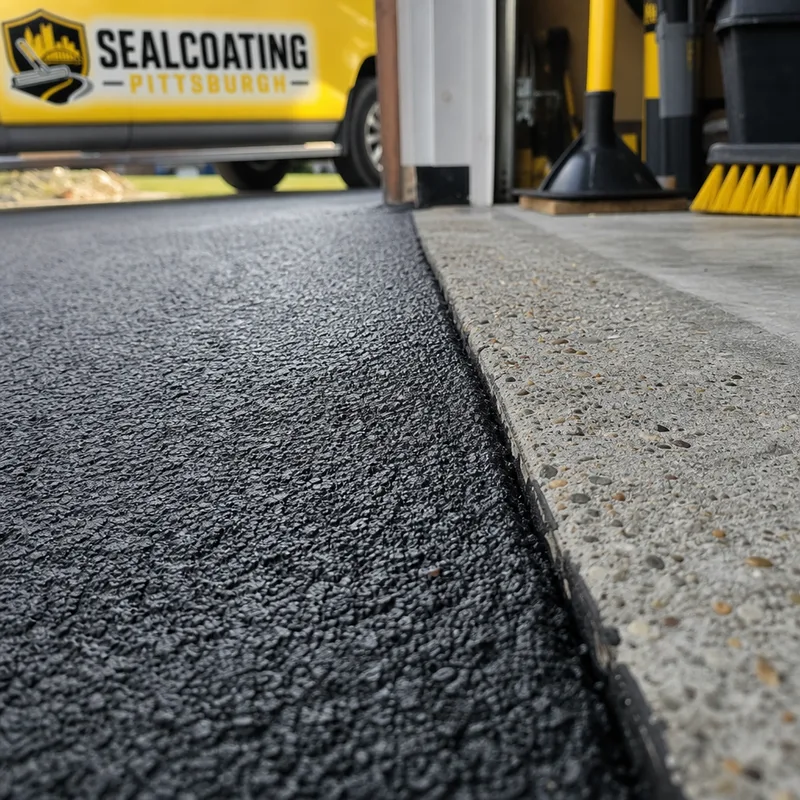
Book Your Free InspectionRepair and protection side by side: cut patches, tied joints, and the coated surfaces that follow once the structural work is done.
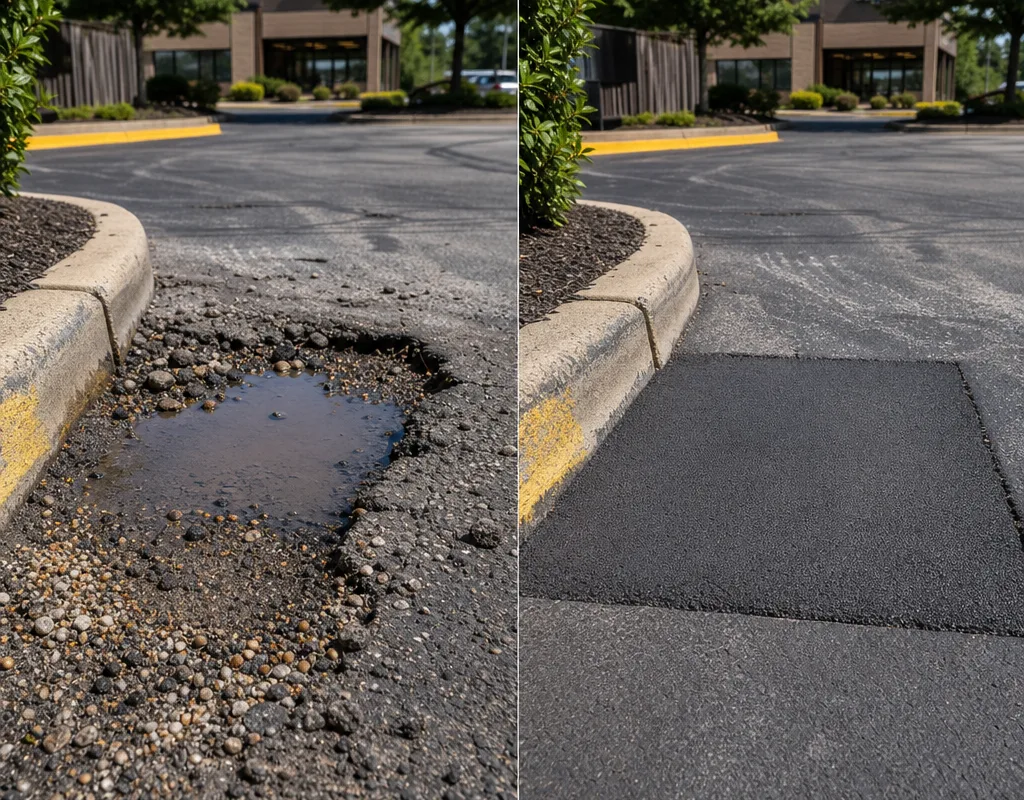
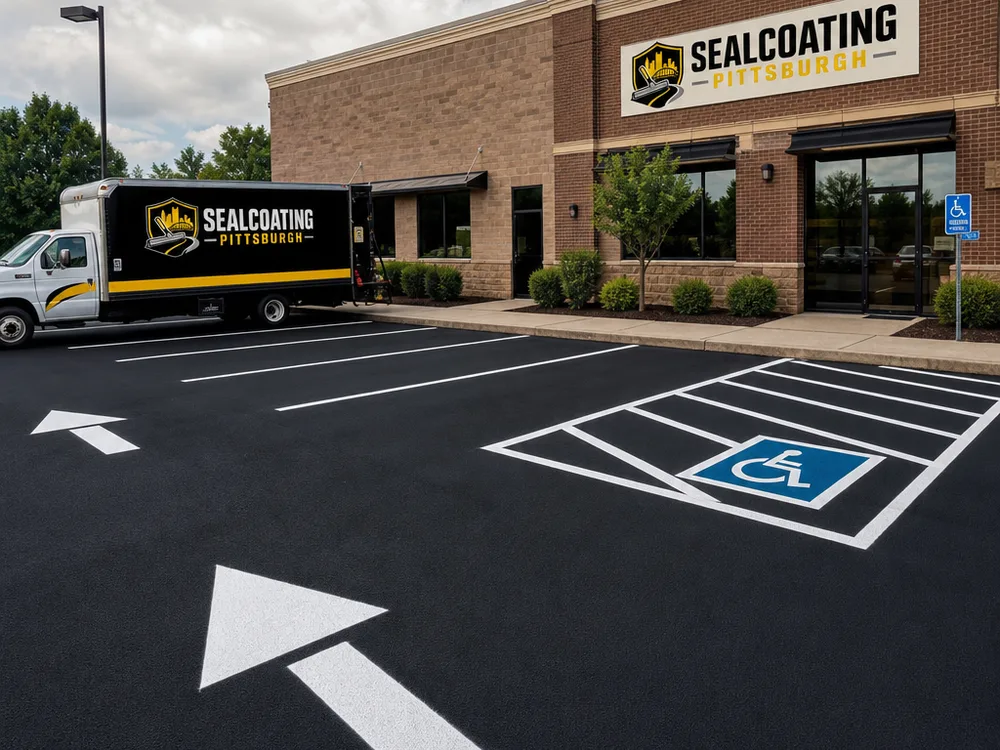
Where filling stops being enough and patching starts, which is the distinction most of these answers turn on, and the one that decides what a coat can do.
Sealing it would not address the dip. Standing water means the surface has settled, and a coating over a settled area cracks along the same shape within a season. That section needs rebuilding first.
Filling treats a crack in a surface that is otherwise sound. Patching replaces a section that has failed structurally, cut out square and rebuilt in layers. A flexing or sunken area needs the second one.
If the patch is flat, tight, and not moving, yes. If it has sunk or its edges have opened, it has not held and coating it just conceals that for a while.
Usually because the cause is below the surface rather than on it. Water reaching the base, or ground that has settled, will keep opening the same line no matter how many times the top is treated.
Often, yes, provided the surface is structurally sound. Sealing an intact older driveway slows the damage. Sealing one that is breaking up underneath is money spent on appearance alone, and we will tell you which one you have.
Not usually. Patch work needs time to set before a protective coat goes over it, so the two are normally separate visits with the interval set by the repair and the weather.
If your driveway is holding water in a low area or a section moves underfoot, have the base assessed before any sealing is booked, because coating will not hold over it.
Call for a Free EstimateDescribe where it dips, where it cracks, and whether any section feels soft. We will walk it, sort the defects into repair and protection, and price the two separately so you can decide what to do and when.
Request a quote
Send the size, surface condition, and access details. We reply with next steps and schedule an on-site look before any written scope.