
Application Matched to the Pitch
Coverage is set for the incline rather than by habit. On a fall, material is worked in smaller passes so the film thickness stays even from the garage down to the street.
Serving Pittsburgh, Pennsylvania & surrounding areas
Mon–Fri 8am–6pm · Sat 9am–2pm
Much of Baldwin sits on graded ground, and a driveway cut into a hillside behaves differently under sealer than a flat one. Application rate, edge control, and cure time all follow the slope.
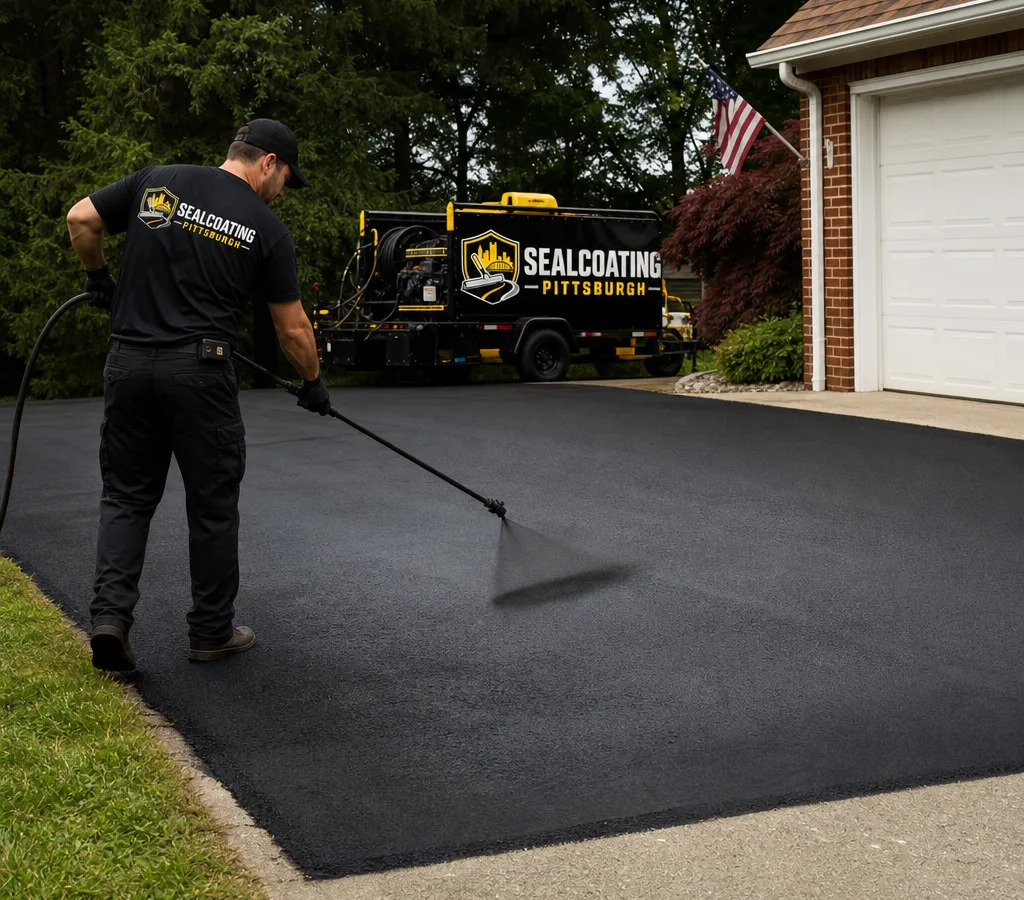
Pour the same material on level ground and on a pitched driveway and you get two different surfaces. Gravity keeps pulling at sealer while it is still wet, so it thins where the fall is steepest and gathers wherever the slope flattens out.
Water does the same thing, except it keeps doing it for years. Runoff follows the fall line, collects at the lowest confined point, and works on whatever it finds there. That is usually the bottom edge or the joint where asphalt meets a concrete apron.
So a sloped driveway is read from the bottom up. The low end shows what the whole surface has been draining into, and that evidence sets the order of the work.
Our shop sits at 2123 5th Ave, Suite 4, Pittsburgh, PA 15219, a short run north of Baldwin, and the grade assessment described here is part of the estimate rather than an extra. For the full range of asphalt work, review sealcoating in Pittsburgh.
Each item below exists because the surface is pitched: how much material stays where it is put, how the low end is protected, and how the drive is held closed while it sets.
Coverage is set for the incline rather than by habit. On a fall, material is worked in smaller passes so the film thickness stays even from the garage down to the street.
The route water takes across the surface is identified first, and the edges along it are prepared properly. Treating the fall line like ordinary pavement is why coatings fail early at the low end.
Where runoff has undercut an unconfined edge, the asphalt is often sound on top and hollow beneath. That gets rebuilt before any coating goes over it.
The seam where a driveway meets a concrete apron collects water on a grade. It is cleaned, filled where it has opened, and cut in by hand for a straight line.
A fresh coat on a slope cannot take a tire until it has set properly. Access is blocked off at both ends and you get a reopening time rather than a guess.
A hillside walkthrough is as much about water as it is about asphalt. We follow where it runs, where it stops, and what it has already done to the surface and the ground holding it up.
The second question is working conditions. A steep surface changes how material can be applied and how the site has to be secured while it sets, and those limits are better known before a date is set than on the morning of the work.
What comes out of that is a scope in writing: what gets repaired, what gets coated, and what is honestly not worth coating yet.
This page deals with residential driveways on grade. Where a sloped commercial approach or a shared drive lane is involved, that is a different scope and we will price it separately during the same visit.
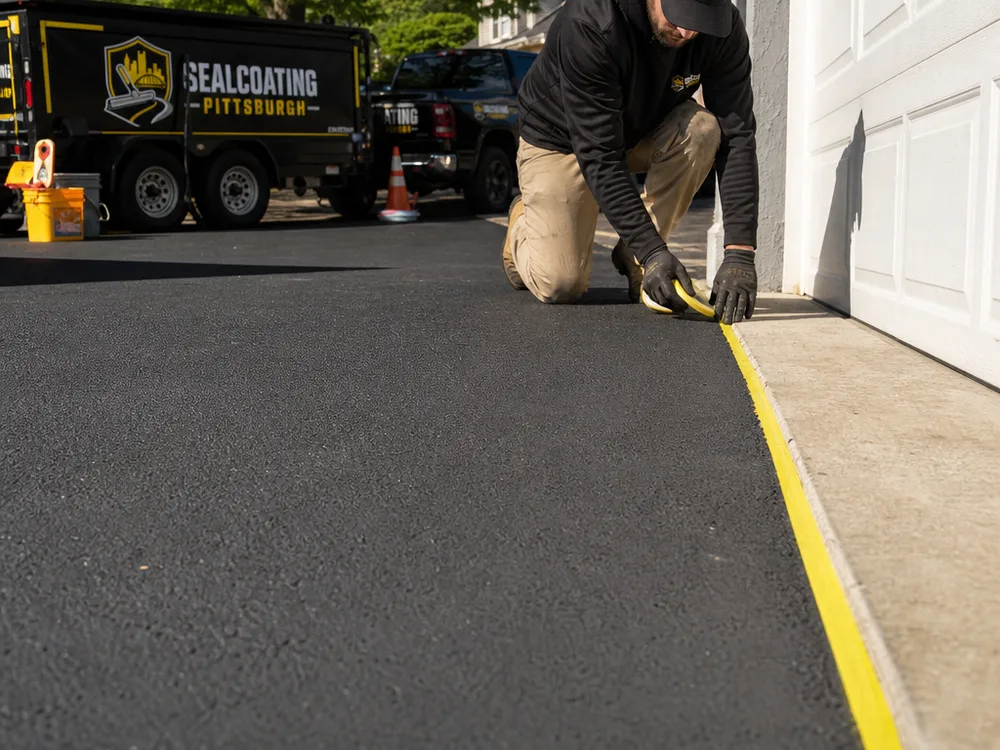 Controlled edge application
On a slope the order is dictated by gravity and water, so we work from the fall line outward rather than simply starting at the top.
Before anything else we mark the direction water takes, the route it follows, and the low points where it ends up. The rest of the sequence is built on that.
Edges that have lost the ground beneath them are repaired first. Coating asphalt that is about to break away at the lip wastes the material and the visit.
Grit and old residue come off, and the surface is given time to dry through. On a shaded hillside driveway that takes longer than people expect.
Open cracks on a grade are a direct path for runoff into the base. They are cleaned out and filled as their own step, not hidden under sealer.
Material goes on in controlled passes from the high end down, so nothing pools at the bottom and the finish stays consistent across the fall.
Asphalt sealing in the Pittsburgh area typically runs about $250 to $900 for most residential driveways, depending on size and condition. Smaller single-car drives often land around $250 to $450, while longer or wider driveways and small private lots are commonly $500 to $900 or more.
Grade does not change the material, but it does change the labor, so a steep driveway sits higher in that range than a flat one of the same size. Where an edge has been undercut and needs rebuilding, that is repair rather than protection and it is quoted separately. Exact pricing is confirmed after a site visit.
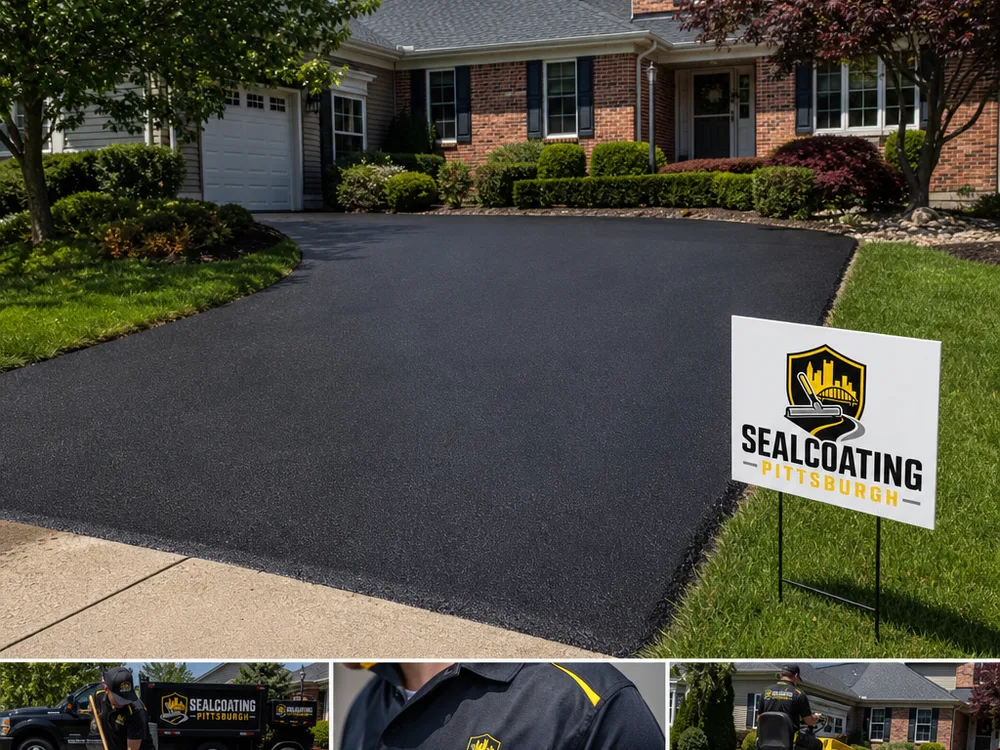
Book Your Free InspectionGraded driveways after coating, with the low-end edges and garage aprons where a sloped surface tends to show its real condition first.
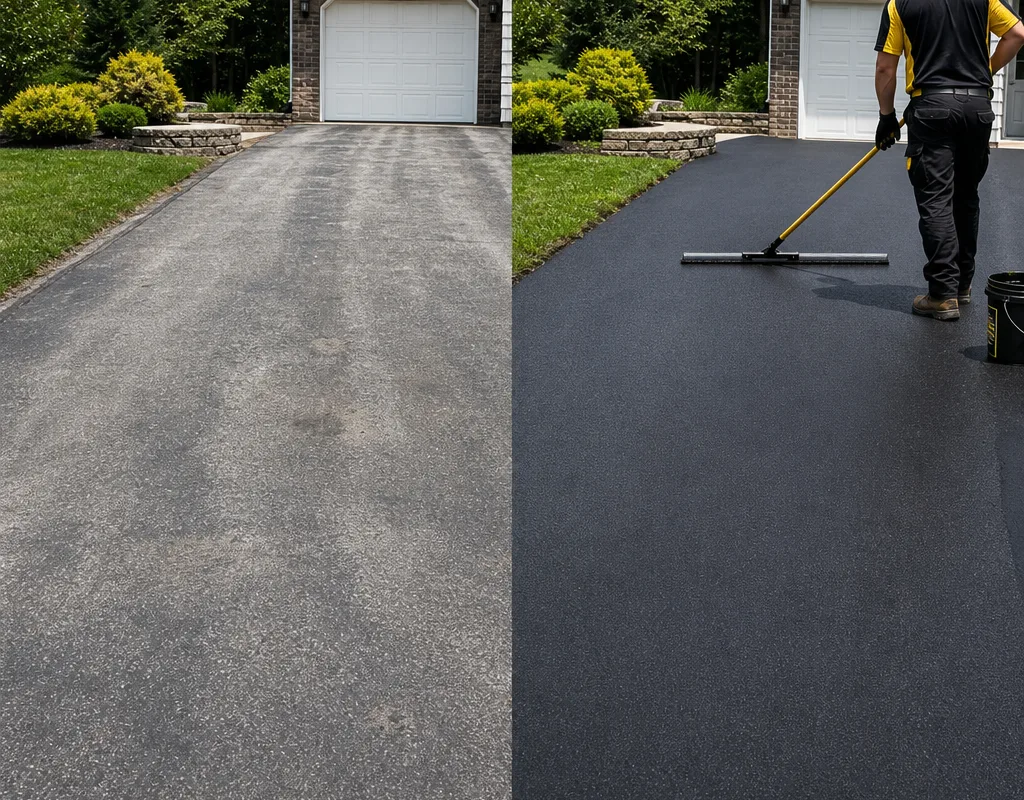
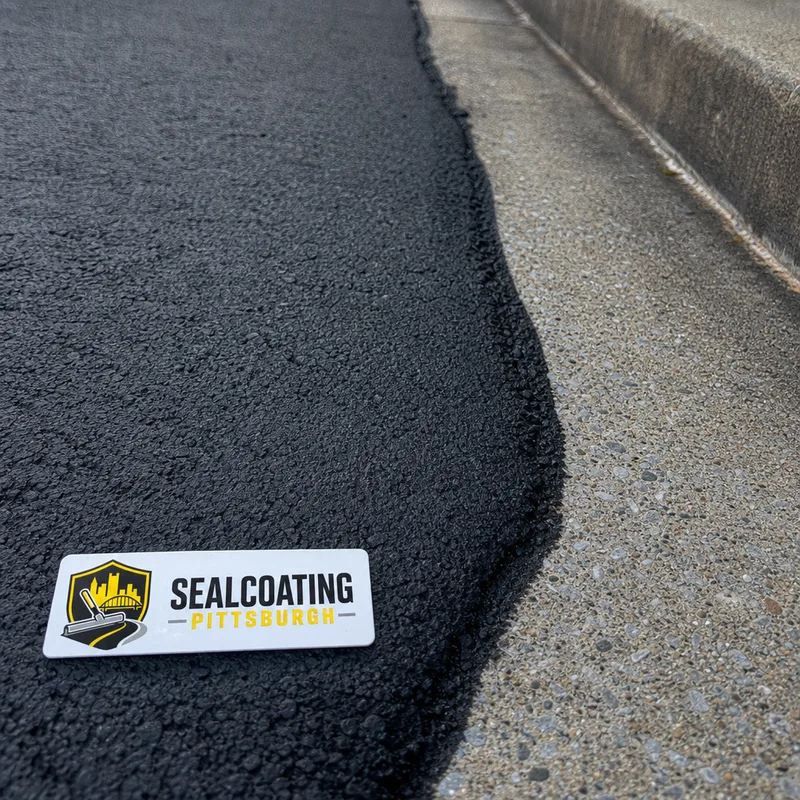
What comes up when a driveway runs downhill rather than sitting flat, including why the bottom of it almost always goes before the top does.
It takes more control. Material wants to move downhill while it is still wet, so it goes on in smaller passes and the crew watches film thickness the whole way down rather than spreading and moving on.
Because that is where water ends up. Runoff follows the slope and concentrates at the lowest confined point, so the asphalt there stays wet longer and breaks down first. It is the normal pattern on a graded drive.
Longer on a slope than on flat ground, and longer in shade. You get a specific reopening time at the end of the visit, and the access stays blocked until then because a tire on soft sealer leaves a mark that does not come out.
Not as it stands. If the ground under an edge has washed out, that edge is rebuilt first. Coating over it looks right for a season and then cracks along the same line.
No. Sealer protects the surface from water, salt, and sun. It does not change where water goes. If runoff is undercutting an edge or ponding against the garage, that is a grading or repair question and we will say so.
Most hold up for a few years, though a drive that takes concentrated runoff or full afternoon sun tends to need it sooner. We would rather look at the surface than quote an interval from a chart.
If your driveway is breaking up at the low end or the edge has started to drop away, have the grade and the runoff looked at before any coating is scheduled.
Call for a Free EstimateTell us how steep it runs, where water collects, and what the bottom edge looks like. We will walk it, separate what needs rebuilding from what needs protecting, and put the scope in writing before anything is scheduled.
Request a quote
Send the size, surface condition, and access details. We reply with next steps and schedule an on-site look before any written scope.